Training Gets You In the Room. Learning Changes What You Do There.
Ask Steven Yeo to explain what he does, and he'll draw a line most people in his field quietly avoid. Training, he'll tell you, is something you attend. Learning is what actually changes how you think, decide, and act. It's a distinction that sounds simple — but building a career around it is anything but.
With over a decade of L&D experience spanning Amazon Web Services, Meta, Schneider Electric, and now Vantage Data Centers, where he leads Training & Development for the APAC Operations team, Steven has consistently pushed organisations away from the comfort of completion metrics and towards something harder to measure and far more valuable: genuine capability.
"The work isn't really about running or delivering many courses," he says. “It is about strengthening how people perform in their roles."
On Measuring What Actually Matters
Early in his career, Steven noticed that most L&D programmes were being evaluated on the wrong things — attendance numbers, satisfaction ratings, completion rates. Success was tidy on paper and largely meaningless in practice.
So he changed the question. Instead of asking employees whether they attended a programme, he started asking how they had applied what they learned. He looked for evidence of changed behaviour in day-to-day conversations, in the decisions people made, in the way they responded when situations stopped being straightforward.

"It takes a lot more time and patience," he acknowledges. "A lot of follow-up, a lot of coordination with line managers. But you actually connect learning to real performance."
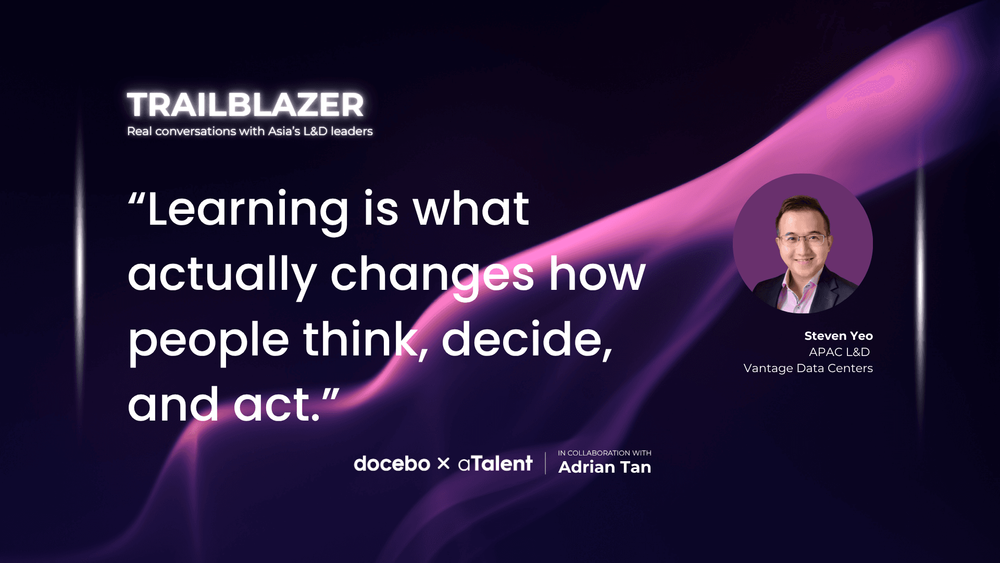
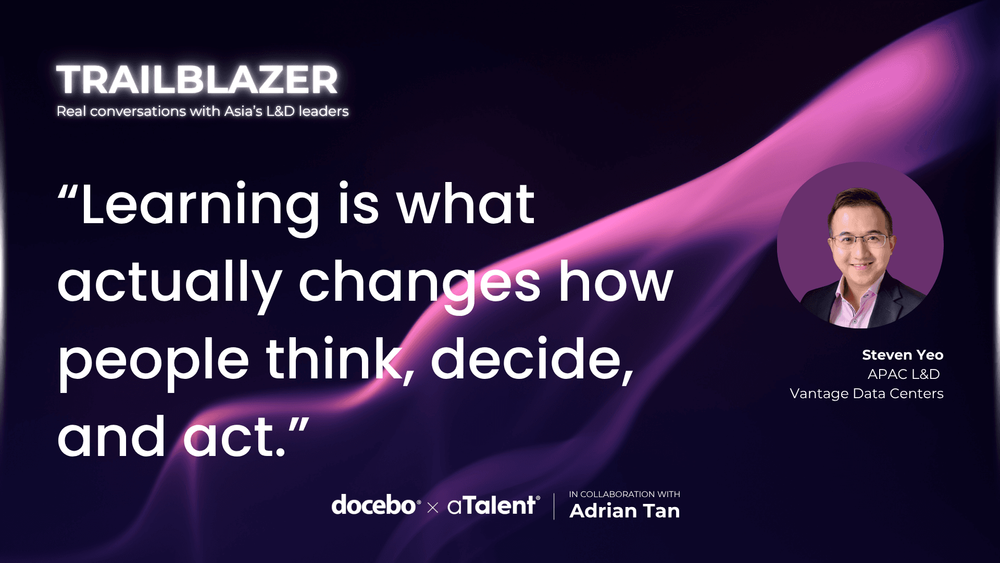
"Training is something you attend. Learning is what actually changes how people think, decide, and act."
The Belief He Pushes Back On
Steven's sharpest disagreement with conventional L&D wisdom is a familiar one — but he lives it with unusual rigour. The assumption that training is the answer to every performance problem, he argues, is both simplistic and counterproductive.
When someone isn't performing, the reflex is to prescribe a course. But more often than not, what's missing isn't knowledge — it's judgment, confidence, or the right conditions to apply what they already know. His instinct is always to pause and ask: can this be addressed through on-the-job coaching? A conversation? Thirty minutes working alongside someone more experienced?
"The most important question," he says, "is whether the experience changes behaviour — improves judgment, sharpens problem-solving, helps people make better decisions within their roles."
Setting People Up to Succeed
The L&D initiative Steven points to with most pride is deceptively unglamorous: structured onboarding. Not the box-ticking kind, but a deliberate learning journey designed around the reality of what new joiners actually face in their first 30 days.
His observation, repeated across organisations and industries, is that companies invest heavily in hiring and almost nothing in the critical weeks that follow. “People arrive, complete induction, and are then expected to find their footing. Some struggle, not due to a lack of ability, but often because the learning environment does not fully support them in the transition.”

"We bring people on, put them through many interviews — but the whole process of learning isn't done in the correct manner. End of the day, people leave. It's not that the company is failing in how it operates. People are failing people."
The fix, in his view, is connecting learning design directly to the real problems people encounter on the ground — and building in the feedback loops that allow growth to happen rather than just hoping it does.
On Choosing the Right Tools
Steven applies the same outcome-first logic when evaluating the wave of new technology — AI tools especially — sweeping through the profession: with multiple AI tools already in use, how do you evaluate whether any new one is actually worth adopting?

His filter is straightforward: does it genuinely help people learn better, or does it just make L&D teams look like they're keeping up? Tools that improve how content gets created are useful. Tools that improve how learning actually happens are essential.
"Apart from dollar and cents," he says, "we really need to look at the bigger picture — how does it help us achieve our L&D outcomes, and not just because it looks good or is trendy to use it."
"The question isn't whether a tool looks impressive. It's whether it helps people learn better — and whether that learning shows up in how they perform."
The Criticism Coming for the Profession
Steven sees a reckoning on the horizon. The next generation of employees, he argues, will arrive with faster expectations, sharper instincts, and far less patience for L&D that can't demonstrate its impact on performance. Organisations that have continued to prioritise training delivery over genuine capability-building will find themselves exposed.
His answer is to reposition L&D not as a provider of programmes, but as a partner in building capability — contributing to the full talent pipeline rather than just filling seats in a learning calendar.
"We need to move from just building knowledge," he says, "to becoming true partners in building capabilities. That's what will make us relevant — and keep us that way."
For Steven Yeo, it always comes back to the same conviction he's held since the beginning: learning that doesn't change how someone performs isn't really learning at all. It's attendance. And attendance, as any good L&D professional knows, was never the point.
Steven Yeo is one of Asia's featured voices in the aTalent × Docebo Trailblazer Campaign — spotlighting the region's most influential L&D leaders. Learn more at trailblazer.atalent.com