

of companies said finding a job externally was easier than finding one internally, in a Deloitte study cited by Bersin.
Talent Marketplace
Help people find their next opportunity inside
Connect employees with internal roles and projects, match capabilities to work and make development part of internal mobility.
of Schneider Electric leavers cited not finding an internal opportunity they wanted, as reported to Bersin.
hours of project work were unlocked at Unilever, according to Bersin’s 2019 account.
Research context · Internal access and mobility · Josh Bersin · Talent marketplace · 2019 ↗
Josh Bersin · 2019. Schneider Electric and Unilever are external research examples, not aTalent customer results.
Make internal opportunity easier to find
A marketplace needs relevant work, useful profiles and a practical route from interest to participation.
Schedule a DemoPut internal opportunity to work
Discovery, fit and the practical conditions for mobility
Internal discovery
Look for relevant talent beyond the immediate team
When a project needs scarce expertise, consider employees across departments and locations before assuming the capability must be hired externally.
Employee growth
Make the next step visible before people look elsewhere
Give employees a way to discover work that fits their skills and interests. A visible opportunity creates a career conversation; it does not by itself resolve every retention issue.
Learning through work
Use a project to build the capability you need
A stretch assignment can meet a business need while building experience. Discuss the gap, available support and realistic capacity before an employee takes it on.
How it works
From opportunity to participation
- 01
Identify
Define the work and requirements
- 02
Discover
Find relevant internal talent
- 03
Discuss
Review fit and participation
- 04
Mobilize
Agree the assignment and support
Core capabilities
Connect capability with opportunity.
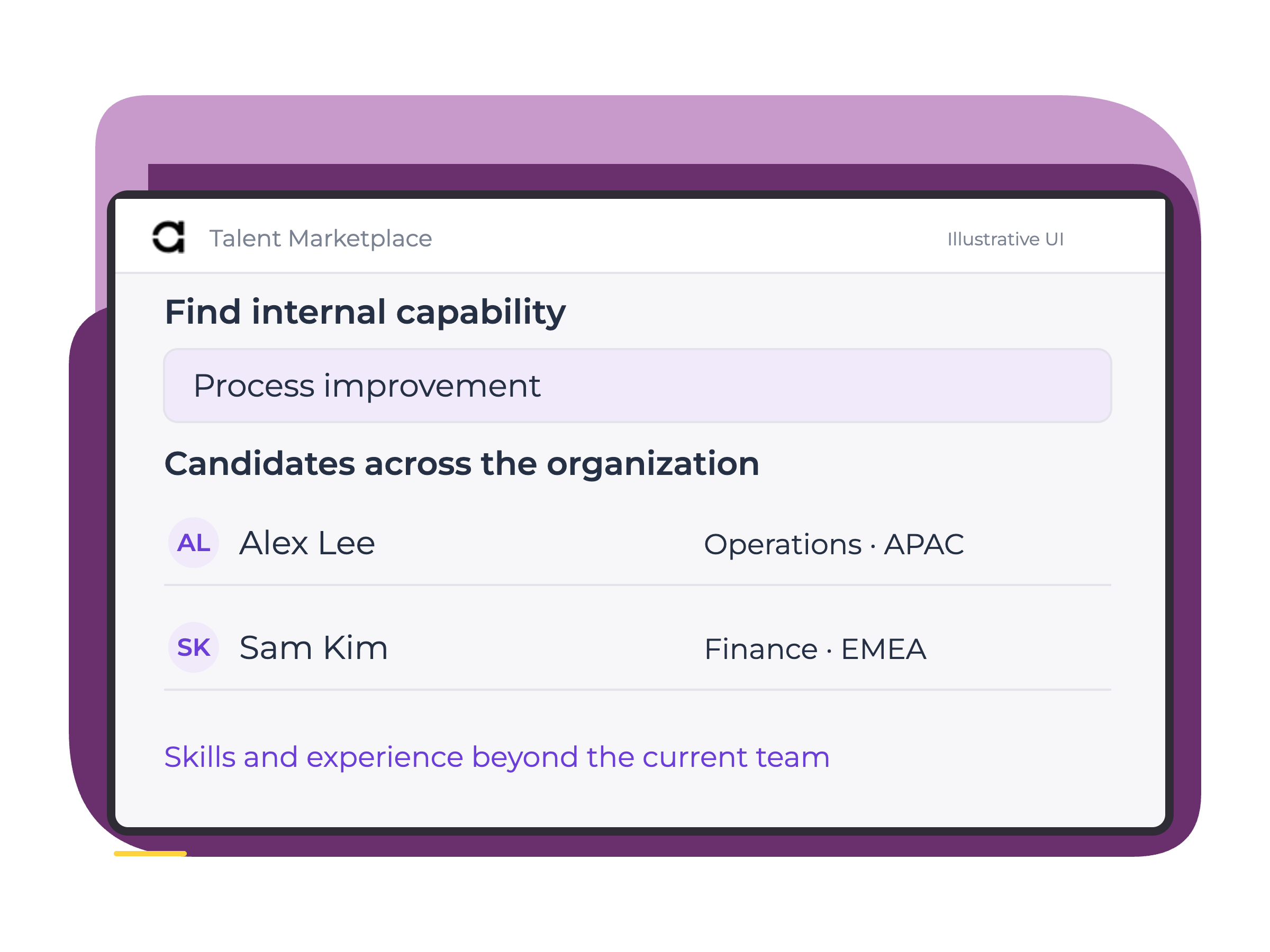
Find talent across teams and locations
Identify internal candidates for projects and roles beyond the immediate department, using the organization’s talent information.
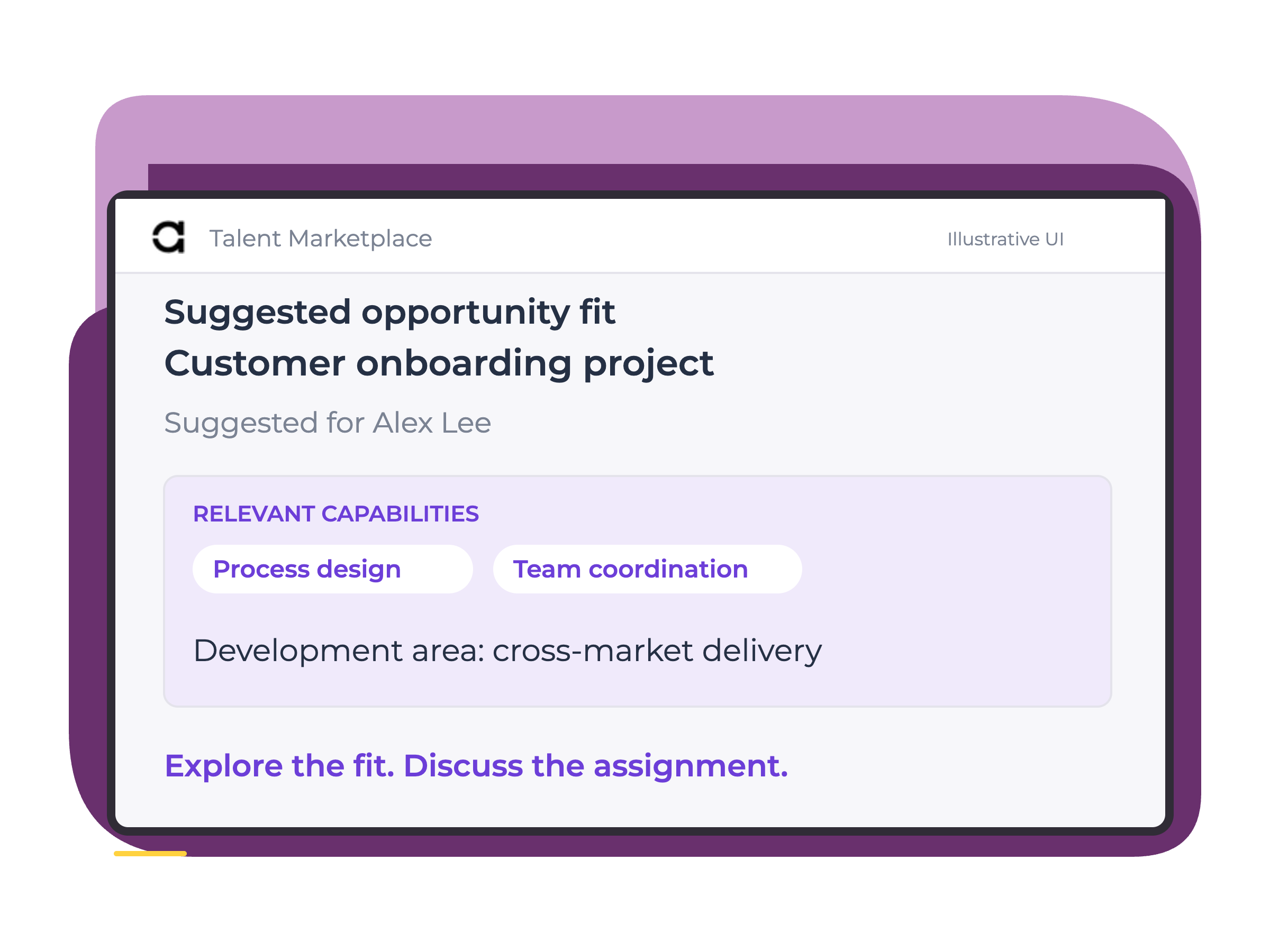
Match people with relevant opportunities
Use skills and other compatibility information to surface possible fits between employees and internal work. A suggested match supports a human decision.
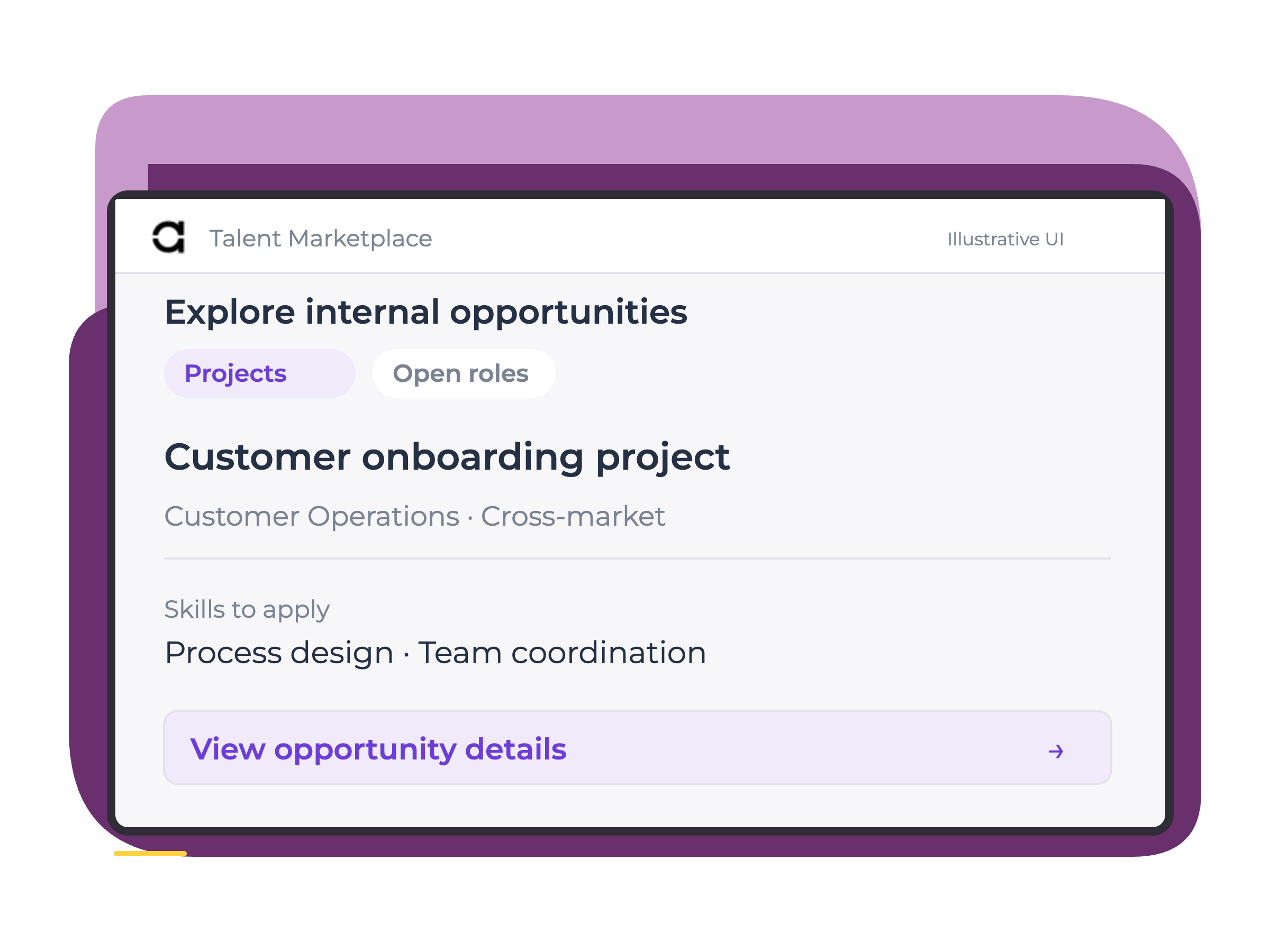
Make internal career options visible
Help employees explore opportunities within the organization and discuss where their capabilities and interests could take them next.
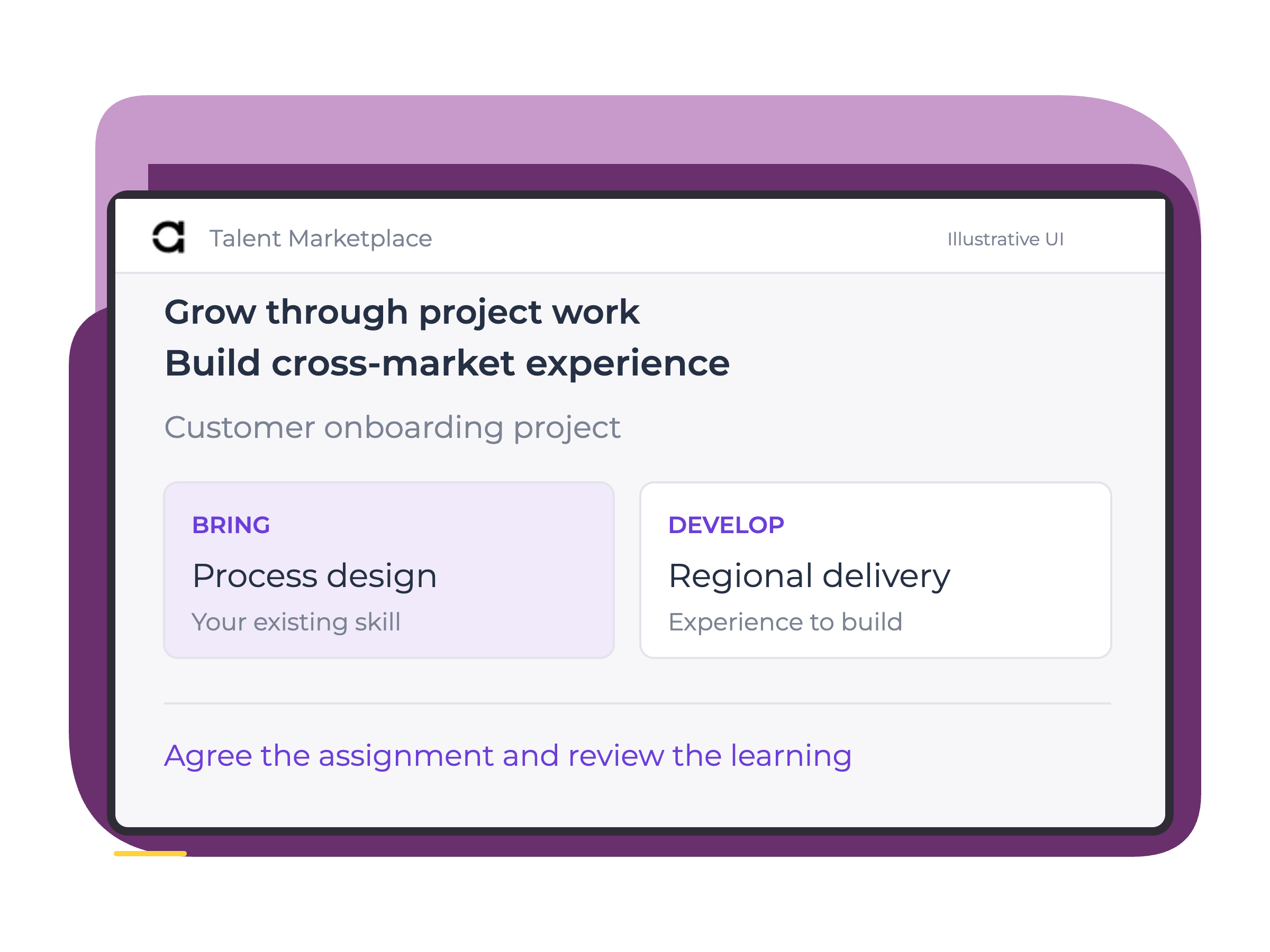
Develop through a relevant assignment
Connect work opportunities with career goals so project participation can build experience as well as address a staffing need.
The mobility agreement
A match is only the beginning
Fit
Is the work relevant?
Review the opportunity requirements against the person’s skills and interests.
Capacity
Can participation work?
Discuss availability, current responsibilities and manager support.
Agreement
What will success mean?
Agree the assignment, support and a point to review the experience.
Research behind the approach
Bersin’s marketplace research describes a shift from fixed organizational boundaries toward networks of internal opportunity. It also highlights a management issue: visibility must be accompanied by support for people to move.
Josh Bersin · Research perspective ↗Connect opportunity with capability and direction
Choose the related workflow that supports the decision at hand.
These are related workflows. Module scope and data connections are agreed during implementation
Decide whether you need a group, a plan or an opportunity
Different decisions need different evidence. These workflows can complement one another.
Purpose and evidence across Talent Marketplace, Talent Pool, Careers & IDP.
Swipe to compare the three workflows.
| Decision | Talent Marketplace | Talent Pool | Careers & IDP |
|---|---|---|---|
| Starting question | What internal work could this person do next? | Who should we develop for a shared need? | What should this person develop next? |
| Focus | Roles, projects and person–opportunity fit | A defined employee population | Career direction and development activities |
| Useful conversation | Fit, availability and participation | Purpose, criteria and cohort development | Priority, support and progress |
| How they connect | Work can provide a development experience | A pool can reveal relevant candidates | A plan can give an assignment a learning purpose |
FAQs
Opportunities, matching and mobility
What is an internal talent marketplace?
A way to help employees and managers discover internal work and relevant talent. aTalent’s published page describes opportunities across projects, departments and locations, with matching and development through assignments.
How is it different from an internal job board?
A job board primarily lists vacancies. A marketplace also considers how employee capabilities and interests relate to projects or other work opportunities. The useful output is a potential fit that people can examine.
Is it only for permanent job changes?
No. The published product also describes project deployment and stretch assignments. Confirm which opportunity types and participation processes are included in your implementation.
What information supports matching?
The published page describes skills and other compatibility information, as well as employee career goals. Review the available profile data and opportunity requirements before relying on a recommendation.
Does a recommended match approve the move?
No. A suggestion should support consideration. Selection, availability, release from current responsibilities and the final assignment remain organizational decisions.
Can it help find talent outside a department?
The product describes identifying internal candidates across departments and locations. The value depends on relevant profiles and opportunities being available within the agreed access scope.
How does this connect to development?
An assignment can provide practical experience relevant to a person’s career direction. Agree the learning purpose, support and review point so the work is more than an extra task.
What if a manager cannot release an employee?
Make capacity and current commitments part of the mobility conversation. Define escalation and release rules before launch so an expression of interest has a clear route to a decision.
Will it guarantee retention or eliminate external hiring?
No. Internal opportunities can support growth and staffing, but retention has multiple causes and some skills still require external recruitment. Evaluate outcomes in your own operating context.
What should be prepared before launch?
Begin with real opportunities, useful employee profiles, clear participation rules and managers who support mobility. An empty catalog or inaccessible process gives people little reason to return.
What is the difference from Talent Pool?
Talent Pool groups people around a shared need; Talent Marketplace connects people with specific opportunities. A pool may inform candidate discovery, while a marketplace needs actual work to match them to.
Are the external company examples aTalent customer results?
No. The Bersin article discusses other organizations as research examples. This page uses the management principles and does not present their reported outcomes as aTalent results.
Start with real work to fill
Bring a project or internal role, the capabilities it requires and the participation rules you need to resolve.
Schedule a Demo