Priority populations
Know who to develop for an emerging need
When demand for a capability grows across the business, organize a relevant population instead of rebuilding a candidate list for every discussion.


Talent Pool
Organize employees around strategic needs, bring their talent information together and focus development on what comes next.
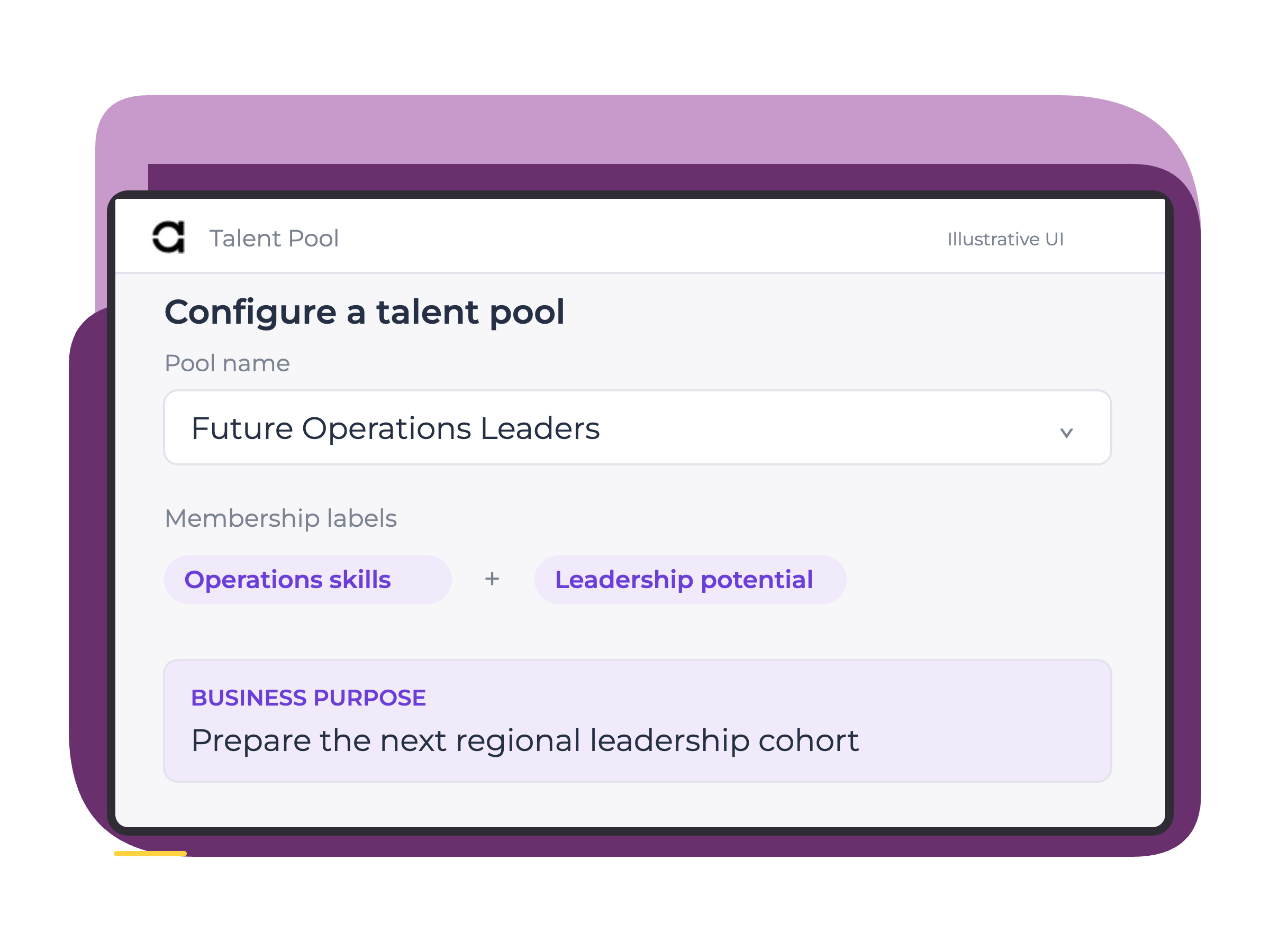
Define why the population matters, then give its development a direction.
Schedule a DemoPurpose, relevant talent information and development
When demand for a capability grows across the business, organize a relevant population instead of rebuilding a candidate list for every discussion.
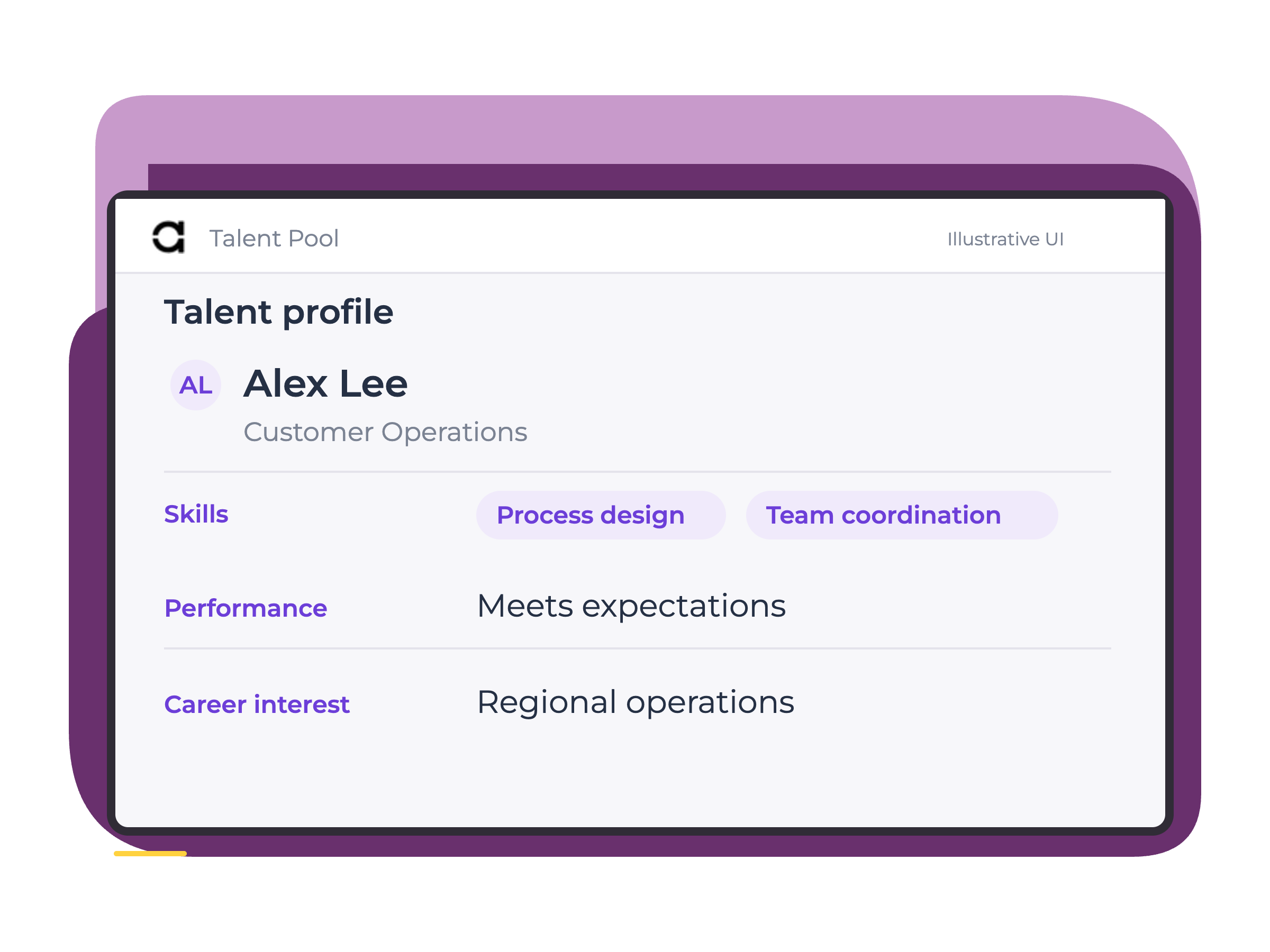
Skills alone do not explain a person’s direction. Review performance and aspirations alongside capabilities before discussing the opportunity or development they need.
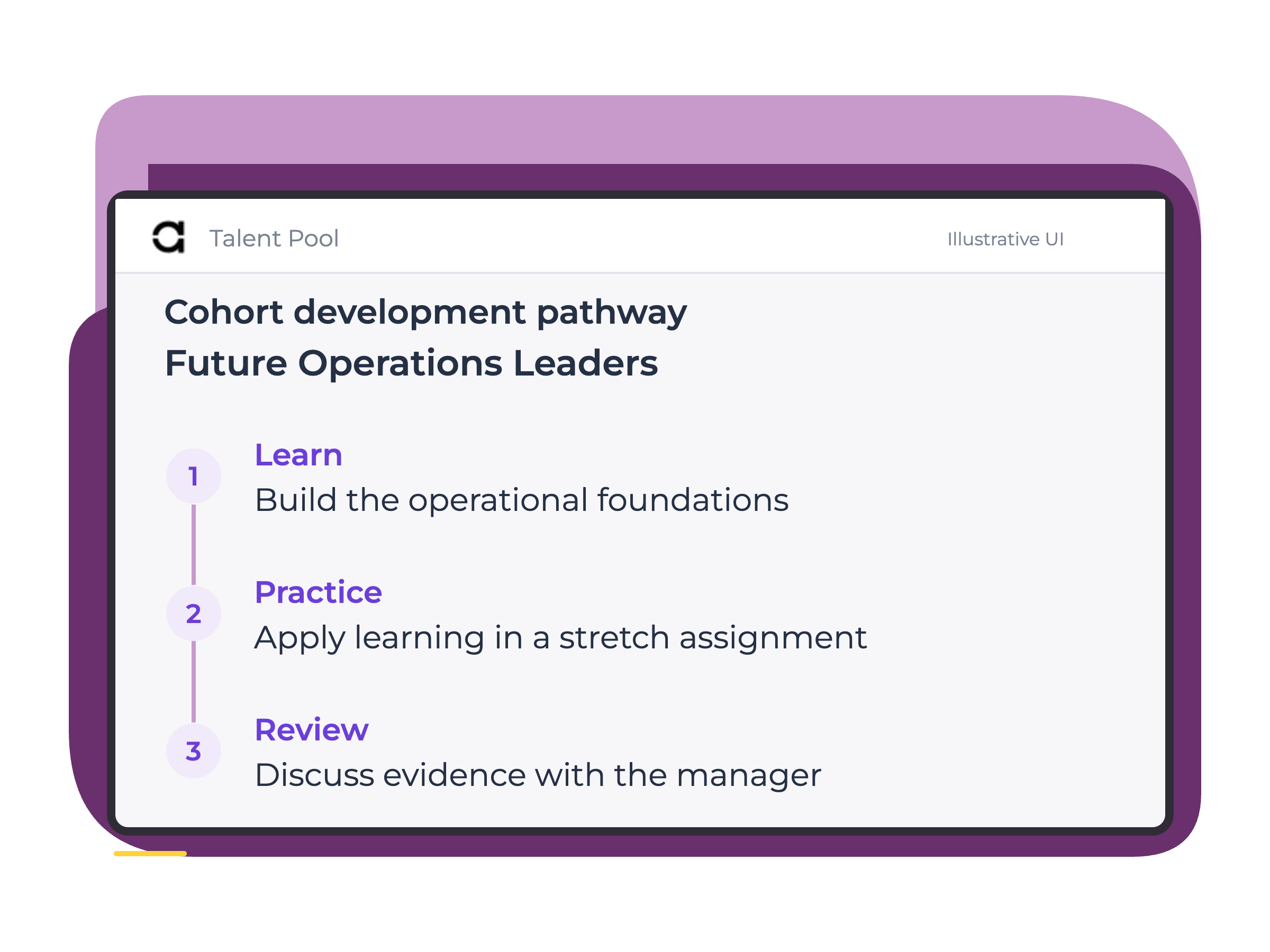
Use a shared development focus to connect learning, mentoring or career preparation. Revisit who belongs in the pool as needs and circumstances change.
Agree the purpose of the pool
Label and group relevant talent
Focus learning and support
Revisit profiles and membership
Use customizable labels based on skills, performance or potential to organize employees for a defined business purpose.
Consolidate skills, performance and aspirations into a panoramic view that supports workforce and development discussions.
Use learning pathways and career development to give a cohort a direction beyond initial identification.
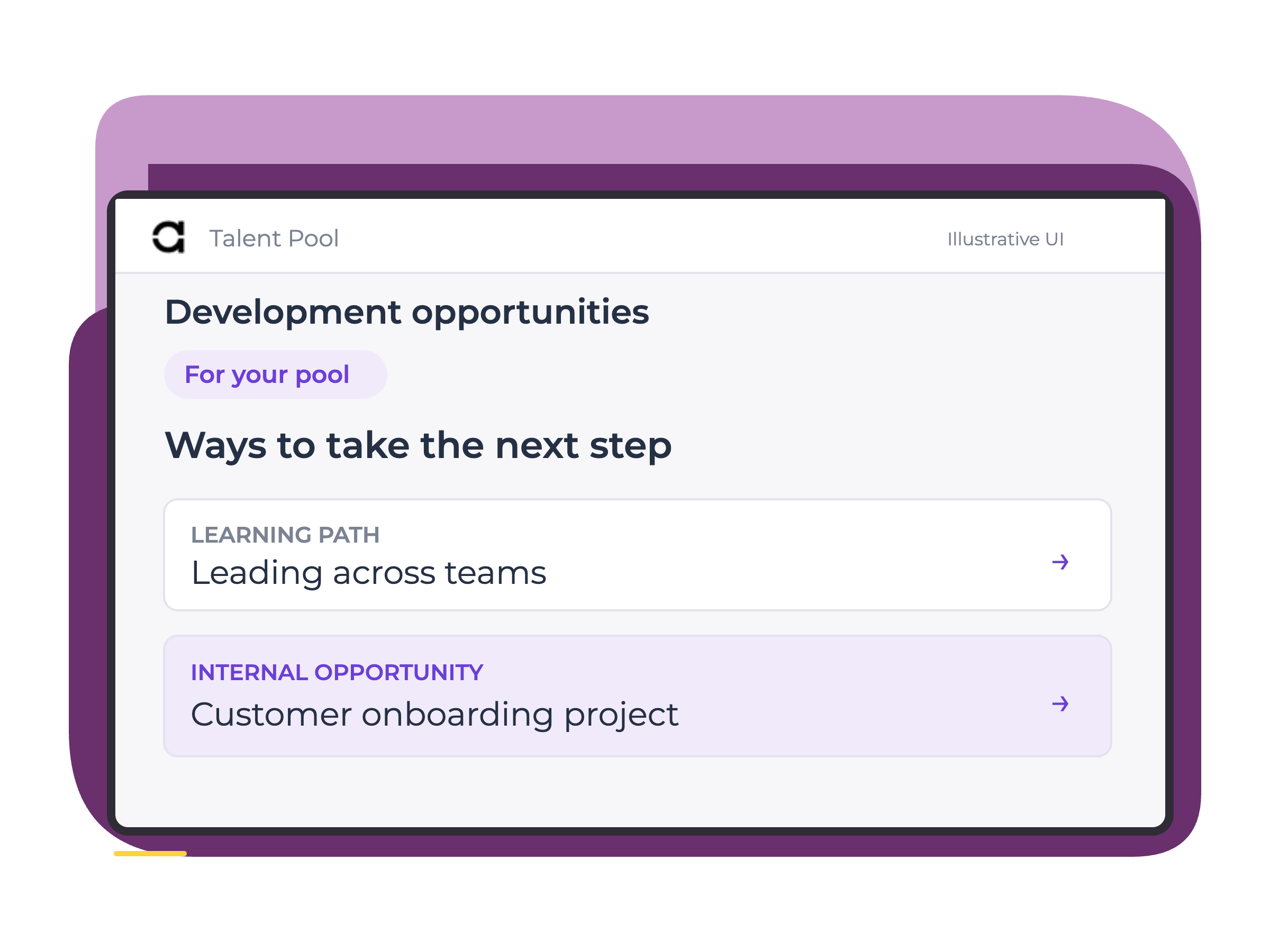
Use engagement and internal-mobility practices to help employees see ways to participate and grow within the organization.
Pool design
Name a business capability or future workforce need.
Agree criteria using skills, performance, potential and aspirations.
Identify useful learning, experience or mentoring, then revisit participation.
Bersin’s development framework combines education, experience, exposure and evaluation. For a talent pool, this informs the principle that identification should lead to development rather than a permanent label.
Josh Bersin · Research perspective ↗Choose the related workflow that supports the decision at hand.
These are related workflows. Module scope and data connections are agreed during implementation
Project spotlight · Tianneng Group
Tianneng’s published project connects talent information, search, comparison and development tracking with its need for technical talent. It provides a concrete setting for organizing and developing a talent population.
Read the Tianneng projectThis is a multi-module project example, not an isolated Talent Pool retention or hiring result.
Different decisions need different evidence. These workflows can complement one another.
Purpose and evidence across Talent Pool, Succession, Talent Marketplace.
Swipe to compare the three workflows.
| Decision | Talent Pool | Succession | Talent Marketplace |
|---|---|---|---|
| Starting point | A shared capability or workforce need | A specific critical role | An internal role, project or assignment |
| Unit of attention | A relevant group of employees | The role and potential successors | The person–opportunity fit |
| Development purpose | Build capability across the population | Address preparation for the target role | Build experience through relevant work |
| Decision boundary | Membership does not promise a promotion | Nomination does not promise appointment | A match does not replace selection and release decisions |
Purpose, membership and development
A way to organize employees around a defined talent or workforce need. The published module describes configurable labels, talent profiles and connections to learning, mentoring and career development.
This page focuses on employee development and workforce planning. It is not a claim that the module replaces an applicant-tracking system or manages every external recruiting workflow.
Begin with the business need, then agree relevant criteria such as skills, performance, potential and career direction. Review the evidence behind membership rather than relying on a label alone.
The published product supports customizable labels and tailored pools. Define the purpose and criteria for each population so a pool does not become a general list with no development direction.
The published page describes skills, performance and aspirations, including information consolidated from HR systems. Confirm the specific sources and connections available for your implementation.
A pool groups people around a shared need. A succession plan examines continuity for a particular role. Pool membership can inform the discussion but does not establish readiness for that role.
No. It identifies someone for a defined development or workforce purpose. Appointment to a role still depends on requirements, suitability, interest and an authorized decision.
Give it a practical development purpose. Relevant learning, mentoring or experience should help the population prepare for the need that justified the pool.
A cohort can share a capability need while people require different activities and support. Use individual development planning to make those differences explicit.
Revisit it when business needs, evidence or employee circumstances change. Agree ownership and a review cadence instead of treating the initial list as permanent.
Track whether the target population participates in relevant development and becomes better prepared for the defined need. Membership counts alone do not demonstrate capability or readiness.
No. Outcomes depend on the population, development effort, opportunities and business conditions. Track results in the context of the pool’s purpose rather than assume that membership alone changes retention or readiness.
Bring the capability you need to build and the population you want to prepare.
Schedule a Demo