

of companies conducted performance reviews in the research Bersin discussed in 2018.
Talent Review
Bring evidence to decisions about people
Compare performance and potential, calibrate assessments and turn talent discussions into clear next steps.
used performance ratings in some form in the same research.
of rating variation was attributed to the manager in earlier studies cited by Bersin.
Research context · Performance evidence and rating practices · Josh Bersin · Ratings and evidence · 2018 ↗
Josh Bersin · 2018. The rating-variation figure summarizes earlier studies; these are not aTalent product results.
Make the review a decision point
A shared view helps the conversation. Clear criteria and follow-through make it useful.
Schedule a DemoMake the talent conversation useful
Shared criteria, employee context and a next step
Cross-team consistency
Question what the same rating means in different teams
When managers apply different standards, a combined list can hide the disagreement. Use calibration to discuss criteria, evidence and exceptions before acting.
Talent visibility
See the people behind the distribution
A performance–potential view helps locate patterns. Examine the employee’s context and development needs before interpreting a position on the grid.
Decision follow-through
Leave the meeting with a development priority
A talent discussion should inform an action: readiness assessment, targeted development or further evidence gathering. Agree who will revisit it.
How it works
From preparation to a shared decision
- 01
Prepare
Bring relevant talent information
- 02
Map
View performance and potential
- 03
Calibrate
Discuss criteria and evidence
- 04
Act
Agree development priorities
Core capabilities
See the distribution. Examine the evidence.
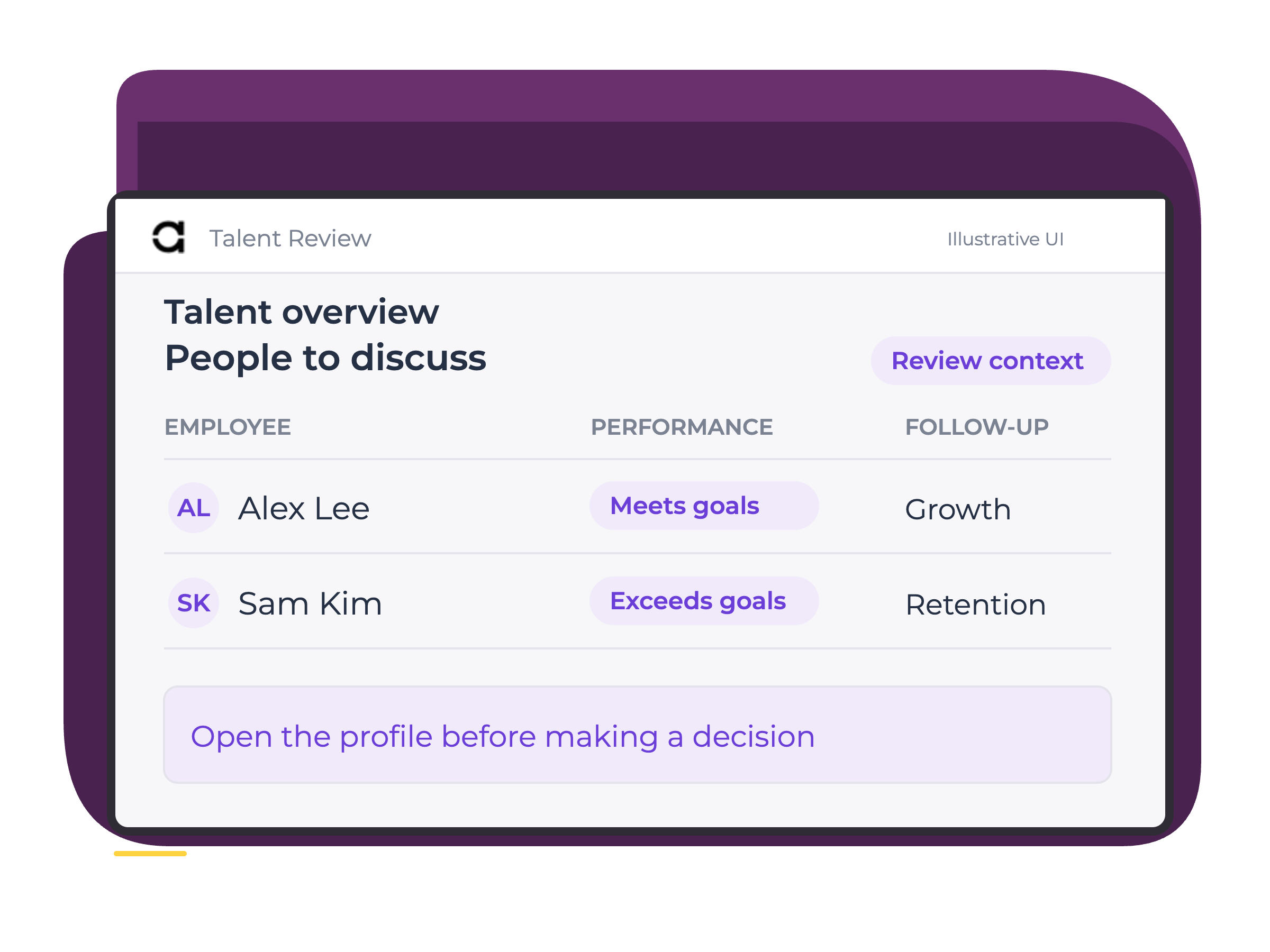
Bring talent information into view
Use dashboards to review performance, potential and risk indicators, then examine the context behind the people who need attention.
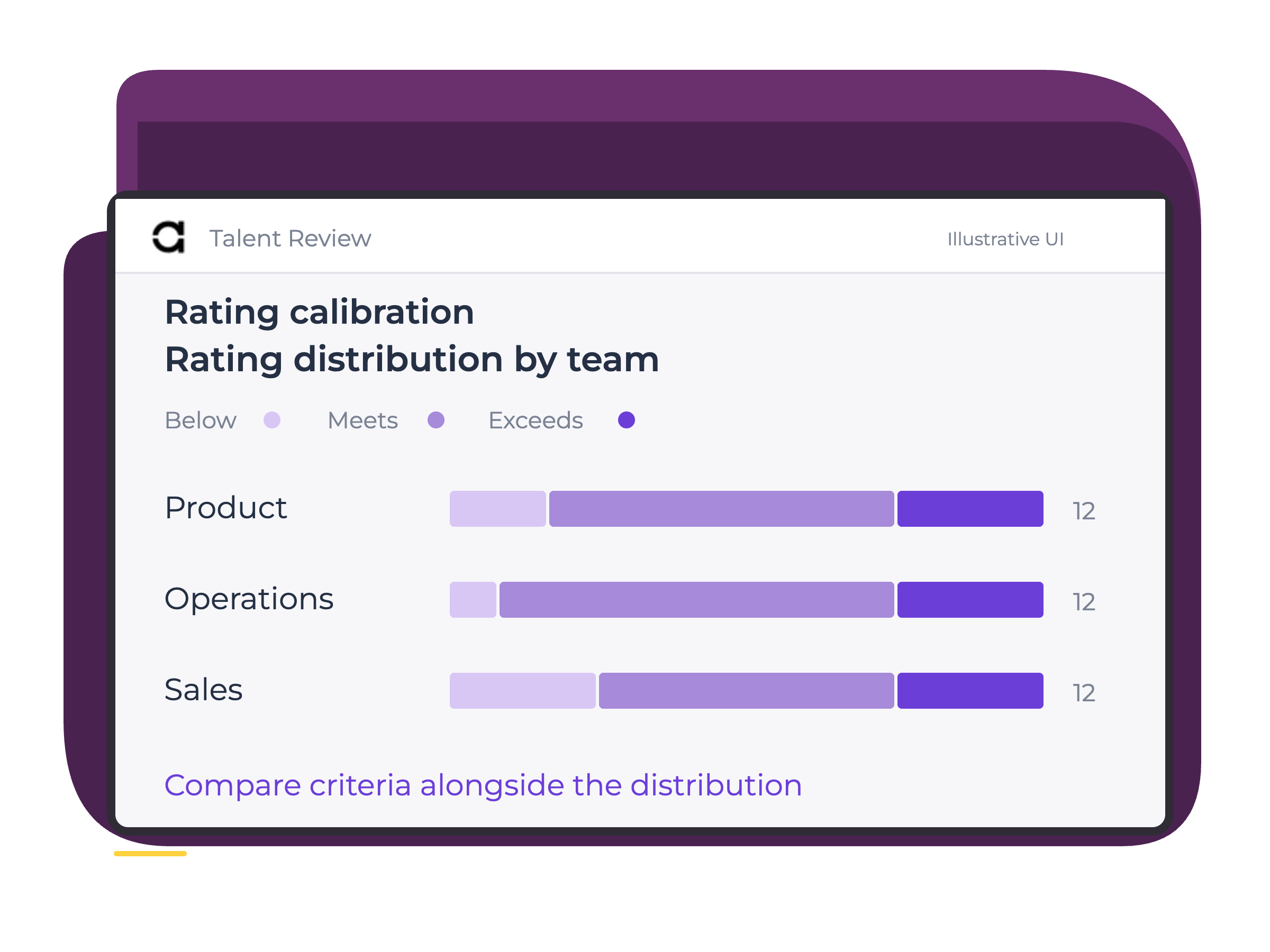
Calibrate assessments across teams
Compare performance ratings across departments and discuss how consistently criteria have been applied.
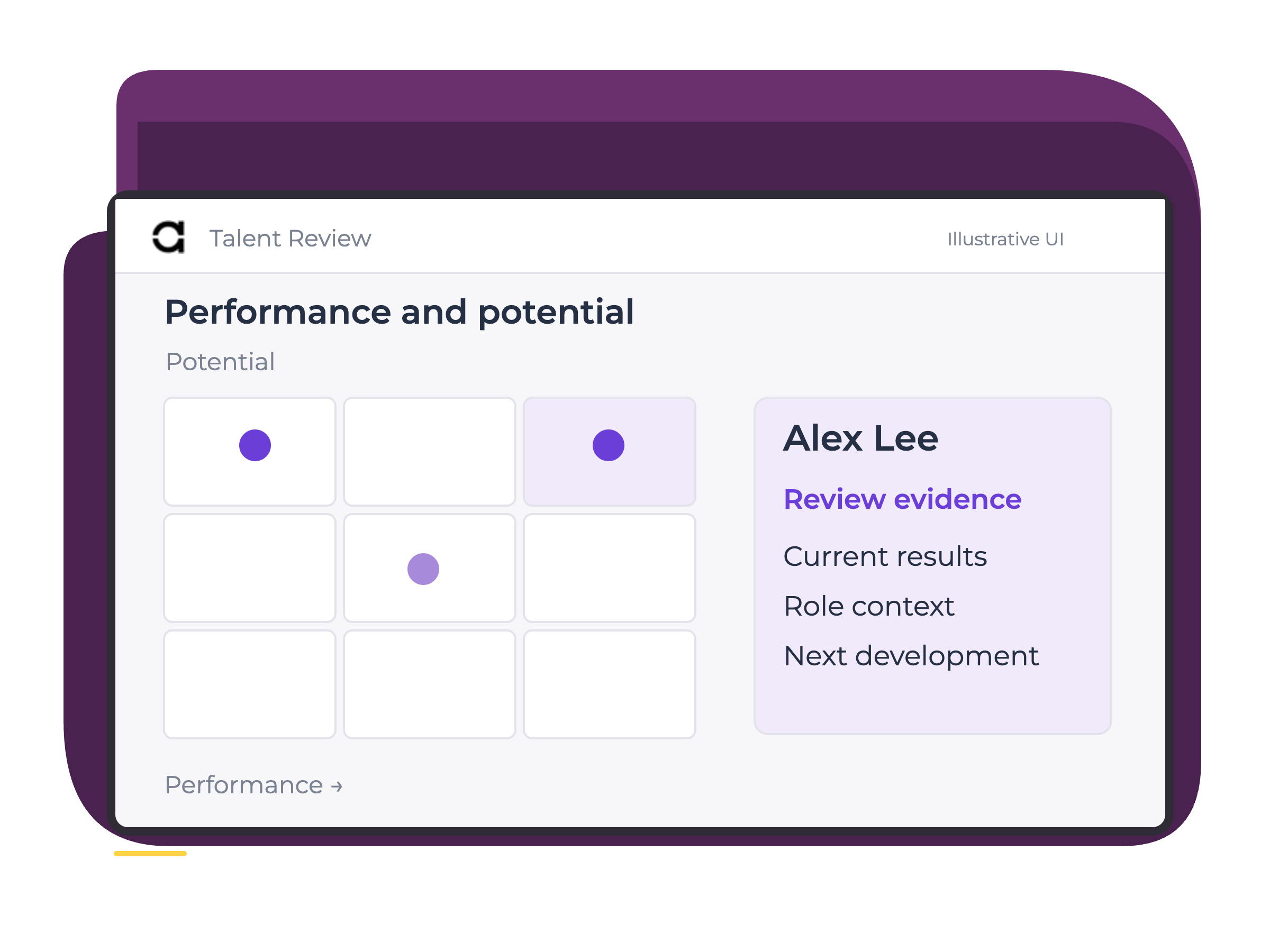
Use a nine-box as a discussion view
Visualize performance and potential through nine-box grids and custom mapping, without treating a grid position as a complete assessment.
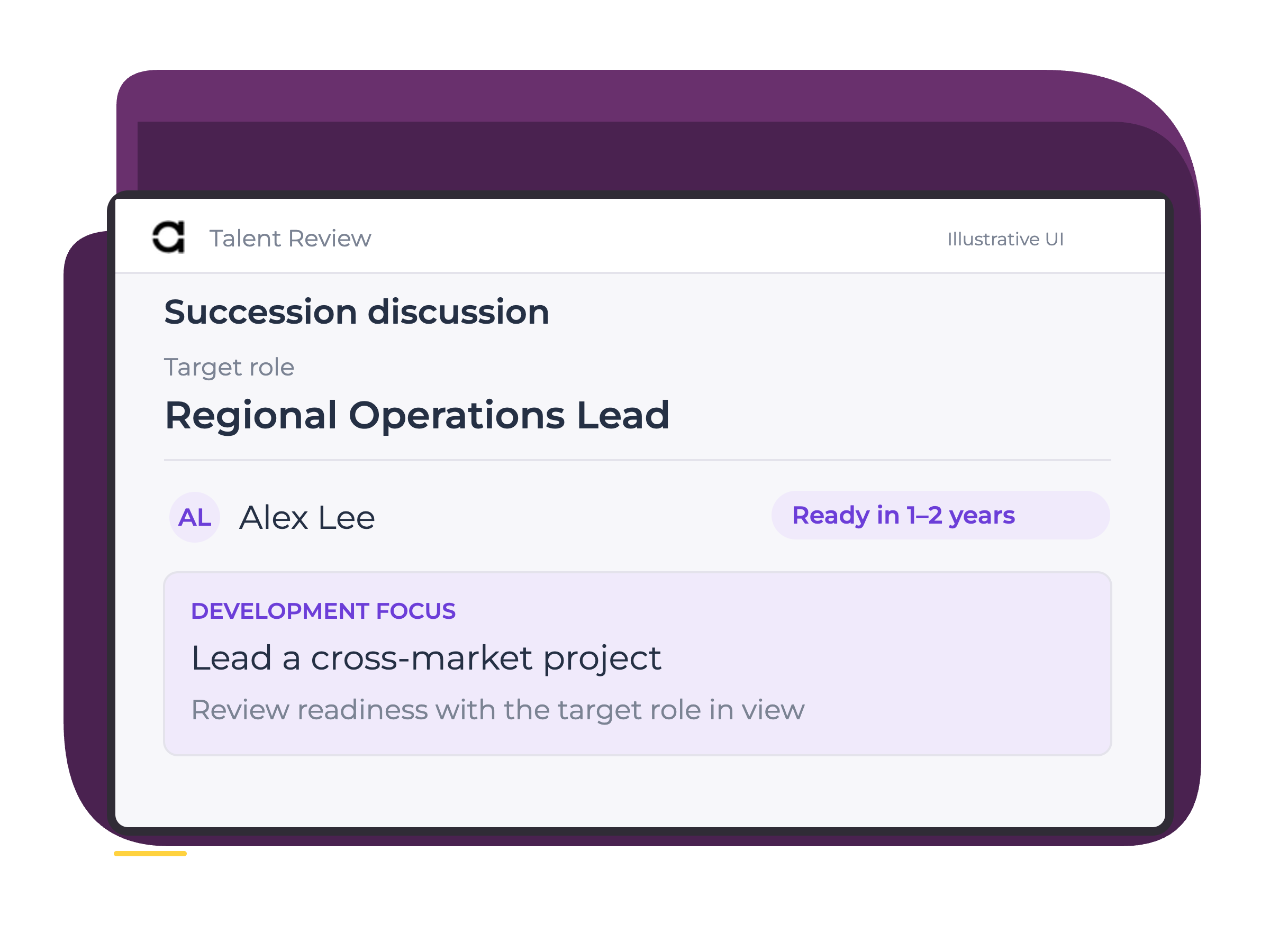
Connect the review to succession readiness
Examine who may be considered for future roles and what preparation should be explored with succession and development planning.
The calibration conversation
A box is a starting point, not a verdict
Criteria
What does the label mean?
Agree what performance and potential mean in this review.
Context
What supports the view?
Examine evidence, differences in opportunity and the requirements ahead.
Decision
What happens next?
Choose a development or readiness question and assign follow-up.
Research behind the approach
Bersin challenges reliance on the nine-box as a leadership-development solution. We use that distinction to keep evaluation connected to experience, support and development, rather than end with a label.
Josh Bersin · Research perspective ↗Turn the review into the next conversation
Choose the related workflow that supports the decision at hand.
These are related workflows. Module scope and data connections are agreed during implementation
Project spotlight · Tianneng Group
From talent information to an online review
Tianneng’s published project describes talent search, comparison and online talent reviews as part of building a talent pipeline. It illustrates the context for reviewing people together rather than in isolated files.
Read the Tianneng projectTalent reviewwithin a broader talent-management project
The article describes project scope and practices; it does not report a measured reduction in rating bias.
Separate the review from the decisions around it
Different decisions need different evidence. These workflows can complement one another.
Purpose and evidence across Talent Review, Performance, Succession.
Swipe to compare the three workflows.
| Decision | Talent Review | Performance | Succession |
|---|---|---|---|
| Main question | How should we understand the talent population? | How has a person contributed in the current role? | Who could be prepared for a critical role? |
| Assessment focus | Performance, potential and comparable criteria | Results, behaviors and feedback | Target-role requirements and readiness |
| Useful output | A calibrated view and follow-up priorities | An evaluation and development conversation | Coverage options and preparation needs |
| What to revisit | New evidence and changes in context | Progress and expectations through the cycle | Role needs and successor preparation |
FAQs
Criteria, calibration and follow-through
What is a talent review?
A structured conversation about a group of employees, typically considering performance, potential and future needs. Its purpose is to support decisions and development priorities, rather than simply generate a ranking.
How is it different from a performance review?
A performance review examines contribution in a current role. A talent review looks across a population to discuss potential, comparable assessments and future needs. The two conversations can use related evidence without having the same purpose.
What does a nine-box grid show?
It places people against two dimensions, commonly performance and potential. It helps organize a discussion but does not explain the evidence behind an assessment or establish readiness for a particular role.
Can the mapping fit our review approach?
The published Talent Review page describes nine-box grids and custom mapping. Agree the dimensions, definitions and review population that fit your organization during solution design.
What does calibration mean?
Managers compare how they have interpreted shared criteria and discuss differences using evidence. Calibration should challenge inconsistent judgments; it is not a requirement to force everyone into a preset distribution.
Does calibration remove bias?
No process or system can guarantee bias-free judgments. Consistent definitions, multiple perspectives and examination of context can improve the quality of the discussion. Managers remain responsible for their decisions.
Is high performance the same as high potential?
No. Strong results describe contribution in the present role. Potential concerns possible growth under particular conditions. Neither establishes readiness for every future position.
How should we use risk indicators?
Treat them as prompts for examination, not proof that a person intends to leave. Consider the information available, its currency and the employee’s circumstances before deciding on a response.
What should happen after the review?
Choose a useful next action, such as exploring readiness for a role, agreeing a development priority or gathering missing evidence. Assign responsibility and a review point.
How does Talent Review connect with Succession?
Talent Review helps compare a population; Succession focuses on coverage and preparation for specific roles. A nomination arising from a review still needs to be examined against the target role’s requirements.
Who should access review information?
Agree access according to the sensitivity of performance, potential and risk discussions. Validate who can view and maintain each type of information during implementation.
What evidence supports the customer example?
The linked Tianneng article describes talent search, comparison, online reviews and development tracking within a wider talent-management project. It does not isolate outcomes from the Talent Review module.
Bring the decision your review needs to support
Start with the population, assessment criteria and the follow-up decisions your team needs to make.
Schedule a Demo