The goal isn't to leave leaders more confident. It's to leave them more awake.
Nicole Mathiaz wants leaders to feel a little less certain by the end of a programme. Not destabilised. Just awake again.
It is an unusual ambition in a profession that typically measures success by confidence scores and completion rates. But Nicole, who leads WDHB's Singapore studio and designs immersive leadership programmes across APAC, has a very different theory of what learning is actually for.
"Nobody's running the business they were originally trained for anymore," she says. "A lot of firms transfer knowledge. What we try to do is create the conditions for leaders to confront reality differently themselves. That's a very different thing."
WDHB has operated on that premise since 1989, long before experiential learning became a trend. Their programmes don't put leaders in classrooms. They put them in Xiaomi's superfactory, in TikTok's livestreaming studios, in humanoid robotics labs, in conversations with NASA flight directors and Olympic athletes. The learning is lived rather than presented. And the goal is not to fill leaders with answers, but to stretch them just far enough past their comfort zone that their assumptions can no longer hold.
"The change I'm trying to create," Nicole says, "is leaders who can exercise judgment in environments where there isn't a playbook yet."
What AI Is Actually Doing to Leaders
When the conversation in L&D turned to AI, most organisations asked the same question: what tools do we adopt, and how do we train people to use them?
Nicole found herself more interested in what was happening to the people sitting around those tools.
"I remember sitting in a leadership team after an AI discussion and realising that the real anxiety in the room wasn't technical at all," she says. "People were wondering: if AI can do the first job of my thinking, what's the value of me as a leader?"
That is a fundamentally different problem. And it requires a fundamentally different response. The easy version is an e-learning module or a keynote about the future of work. Nicole's version is putting senior leaders in real conversations with industry peers whose landscapes are being disrupted in real time, sitting with the uncertainty, and working through it together.
"Most organisations are trying to solve adaptive problems with informational solutions," she says. "Slower, less tidy, harder to package. But that's where the actual learning is."
"Most organisations are trying to solve adaptive problems with informational solutions. Slower, less tidy, harder to package. But that's where the actual learning is."
The Classroom That Started Everything
Nicole began her career not in corporate L&D, but teaching young children in a classroom. What stayed with her from that time was not the academic outcomes. It was something more specific: the deepest learning happened when students were stretched slightly beyond where they were ready, but with enough scaffolding around them to process it afterwards.
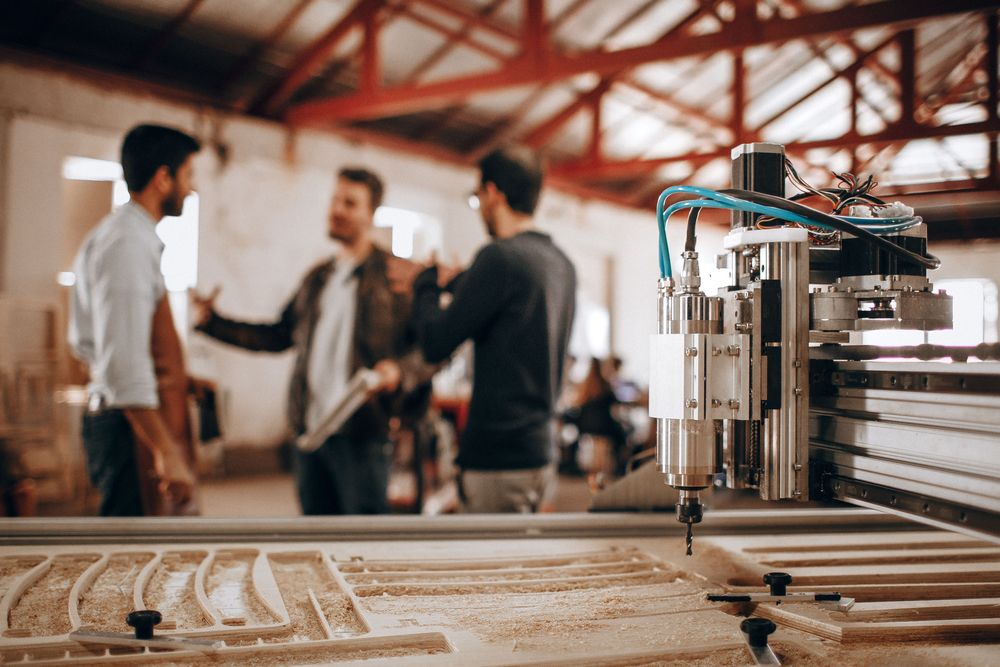
That instinct, carried forward into corporate learning, became her central question: how much of what we call L&D is still built around information transfer rather than transformation?
"Everything I do now goes back to that early instinct, just at a different scale," she says. "It's not about delivering content. It's about designing the conditions where someone outgrows their own assumptions."
On Resistance as a Signal
Bringing senior stakeholders along on unfamiliar ideas is a challenge every L&D practitioner faces. Nicole's starting point is unusual: she has stopped treating resistance as the enemy.
"Resistance is rational," she says. "A business leader usually has far more at risk than I do if something unfamiliar doesn't land well. Saying that out loud tends to change the tone of the conversation immediately."
From there, the work happens through dialogue. She is honest about uncertainty, never promising guaranteed transformation outcomes from a single experience. What she offers instead is a contained experiment: one cohort, one leadership population, a scope small enough to be credible. Once leaders see their own people responding differently, they become advocates.
"The way you bring senior stakeholders along isn't by sounding more visionary," she says. "It's by being more honest about how change actually lands."
"Resistance is rational. A business leader has far more at risk than I do if something unfamiliar doesn't land well. Saying that out loud changes the tone of the conversation immediately."

ROI Is the Wrong Measure
Nicole has a pointed view on how L&D has undermined itself through the metrics it chose to defend its existence.
Completion rates, satisfaction scores, training hours delivered. None of these, she argues, tell an executive whether the organisation can do something it previously could not do.
Her alternative framing: start with the business problem, not the learning metric. One example she returns to involved a global cohort of senior specialists preparing to step into broader generalist leadership roles. The C-suite conversation shifted away from what skills these leaders needed, towards something more useful: how do we help deeply specialised people expand their ability to read complexity at an enterprise level?
"The most powerful evidence we get back isn't from a dashboard," she says. "It's from leaders telling us in their own words what stretched them, what they're holding onto, and what they're doing differently from Monday morning."
She calls it ROE rather than ROI: return on experience.
"Completion rates and satisfaction scores don't tell an executive whether the organisation can do something it previously couldn't. Start with the business problem, not the learning metric."
What the Profession Will Be Criticised For
Nicole's list of L&D's coming failures is characteristically direct. Three things, she says, will draw the sharpest criticism in hindsight.
Measuring the wrong things for too long. Treating learning as something separate from work rather than embedded in it. And being too cautious about discomfort, too protective of learners, too wedded to controlled environments instead of helping people develop judgment under real conditions.
"The leaders running organisations in five years won't be the ones who completed the most courses or collected the most certificates," she says. "They'll be the ones who spent the most time learning to make decisions in conditions they weren't trained for."
The discipline she is still learning herself, she admits, is knowing what to subtract. Every L&D team has finite credibility and trust with the business. Every time they chase something shiny, they spend a little of it.
"Maturity in L&D," she says, "is knowing what not to build."
Nicole Mathiaz is one of Asia's featured voices in the aTalent × Docebo Trailblazer Campaign — spotlighting the region's most influential L&D leaders. Learn more at trailblazer.atalent.com